Join the most comprehensive ABA Technician course!

Signs Your Child Needs Occupational Therapy | Child Hub
Learn the early signs your child may benefit from occupational therapy. Discover how OT improves daily skills, confidence, and independence at Child Hub.
ChildHub
7/24/20263 min read
Signs Your Child May Benefit from Occupational Therapy: A Parent's Complete Guide
Every child develops at their own pace, but sometimes everyday tasks like holding a pencil, getting dressed, sitting in class, or playing with friends can become unexpectedly difficult. These challenges may indicate that your child could benefit from Occupational Therapy (OT).
Occupational Therapy helps children develop the physical, sensory, cognitive, and emotional skills needed for everyday life. At Child Hub, our experienced occupational therapists work closely with families to help children become more independent, confident, and successful at home, school, and in the community.
What Is Occupational Therapy for Children?
Occupational Therapy focuses on helping children perform the everyday activities—or "occupations"—that are essential for healthy development.
A pediatric occupational therapist supports children in improving skills related to:
Fine motor development
Gross motor coordination
Sensory processing
Self-care and daily living skills
Handwriting
Attention and concentration
Emotional regulation
Social participation
The goal isn't perfection—it's helping every child reach their full potential.
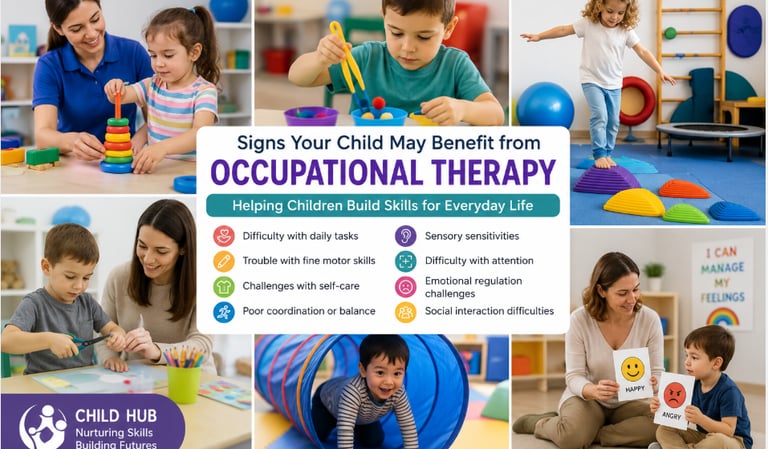
Early Signs Your Child May Need Occupational Therapy
If your child consistently struggles with everyday activities, Occupational Therapy may help.
1. Difficulty with Fine Motor Skills
Your child may:
Hold a pencil awkwardly
Avoid coloring or drawing
Have trouble using scissors
Struggle to button clothes or zip jackets
Find it difficult to build with blocks or puzzles
These skills are essential for school readiness and independence.
2. Delays in Self-Care Skills
Children should gradually learn to perform daily activities independently.
Watch for difficulties with:
Brushing teeth
Eating with utensils
Dressing independently
Washing hands
Using the toilet appropriately
Occupational therapists teach these life skills through engaging, child-friendly activities.
3. Sensory Sensitivities
Some children process sensory information differently.
Signs include:
Covering ears around everyday sounds
Avoiding certain clothing textures
Refusing particular foods because of texture
Becoming overwhelmed in crowded places
Constantly seeking movement or jumping
These behaviors may indicate sensory processing challenges.
4. Poor Attention and Focus
Your child may:
Be easily distracted
Struggle to complete simple tasks
Have difficulty sitting during classroom activities
Frequently switch from one activity to another
Occupational Therapy helps children improve attention through structured play and sensory-based strategies.
5. Balance and Coordination Difficulties
Children experiencing motor coordination challenges may:
Frequently trip or fall
Avoid playground equipment
Struggle to catch or throw a ball
Have difficulty climbing stairs
Avoid sports or physical activities
Improving coordination builds confidence and encourages active participation.
6. Handwriting Challenges
Handwriting involves much more than holding a pencil.
Warning signs include:
Poor letter formation
Uneven spacing
Slow writing speed
Hand fatigue
Difficulty copying from the board
Occupational therapists strengthen the foundational skills needed for better handwriting.
7. Difficulty Managing Emotions
Some children struggle to regulate emotions because of sensory or developmental differences.
Signs may include:
Frequent meltdowns
Difficulty transitioning between activities
Low frustration tolerance
Trouble calming down after becoming upset
OT can help children build emotional regulation skills through sensory and behavioral strategies.
How Occupational Therapy Helps
Every therapy plan at Child Hub is individualized to meet each child's needs.
Treatment may include:
Play-based therapy sessions
Sensory integration activities
Fine motor strengthening
Handwriting practice
Balance and coordination exercises
Self-care skill training
Parent coaching and home strategies
Therapy is designed to be engaging, motivating, and developmentally appropriate.


The Importance of Early Intervention
The earlier developmental challenges are identified, the greater the opportunity to build essential life skills.
Early Occupational Therapy can help children:
Improve school readiness
Increase independence
Develop stronger social skills
Build confidence
Participate more successfully in everyday activities
Reach developmental milestones more effectively
Early support often leads to better long-term outcomes.
Why Families Choose Child Hub
At Child Hub, we believe every child deserves individualized care in a supportive environment.
Our team provides:
Comprehensive developmental assessments
Evidence-based Occupational Therapy
Collaborative treatment planning
Family-centered care
Parent education and guidance
Multidisciplinary support when needed
We partner with families to help children thrive—not just during therapy sessions, but in everyday life.
When Should You Schedule an Evaluation?
If your child's daily challenges are affecting learning, play, communication, or independence, it's worth speaking with a pediatric occupational therapist.
Early guidance provides valuable insights and helps determine whether therapy would benefit your child.
Remember: seeking support early is a proactive step toward your child's success.
Final Thoughts
Every child learns, grows, and develops differently. Occupational Therapy provides the tools children need to participate more confidently in the activities that matter most.
Whether it's improving handwriting, building independence, developing motor skills, or managing sensory challenges, early intervention can make a meaningful difference.
At Child Hub, we're dedicated to helping children build the skills they need for a brighter, more independent future.
Frequently Asked Questions (FAQ)
Is Occupational Therapy only for children with autism?
No. Occupational Therapy supports children with developmental delays, ADHD, sensory processing challenges, learning difficulties, motor coordination issues, and other conditions affecting daily functioning.
What age can a child start Occupational Therapy?
Children can begin Occupational Therapy as early as infancy if developmental concerns are identified. Early intervention often leads to the best outcomes.
How long does Occupational Therapy take?
The duration depends on your child's individual needs, goals, and progress. Your therapist will create a personalized treatment plan.
Does Occupational Therapy improve handwriting?
Yes. Occupational Therapy addresses the underlying motor, strength, posture, and coordination skills required for effective handwriting.